Great work sometimes feels effortless. It’s not just luck.
If you work in a creatively driven industry long enough, you eventually experience it: A project where there’s an amazing team effort. Everything moves forward with sharp focus, and the results turn out genuinely great. When those moments happen, people struggle to describe them precisely. They say things like:
“Everything just clicked.”
“The planets aligned.”
“We got a little lucky.”
The whole experience felt exciting, alive, and slightly magical. Yet because a key ingredient for this success is often unseen, people find it hard to replicate.
Potential has a pattern.
Every project begins with potential. Before timelines, budgets, roles, and deliverables take shape, there’s a window where ambition, exciting possibilities, and potential are wide open.
Then, the organizational process begins. The kick-off meeting happens. Authority becomes assumed, and the various departments begin to apply their own definitions of success. Creatives seek originality. Account Service looks for client satisfaction; Project Managers for scope and timing; Operations for feasibility. Everyone interprets the opportunity through the lens their role requires them to.
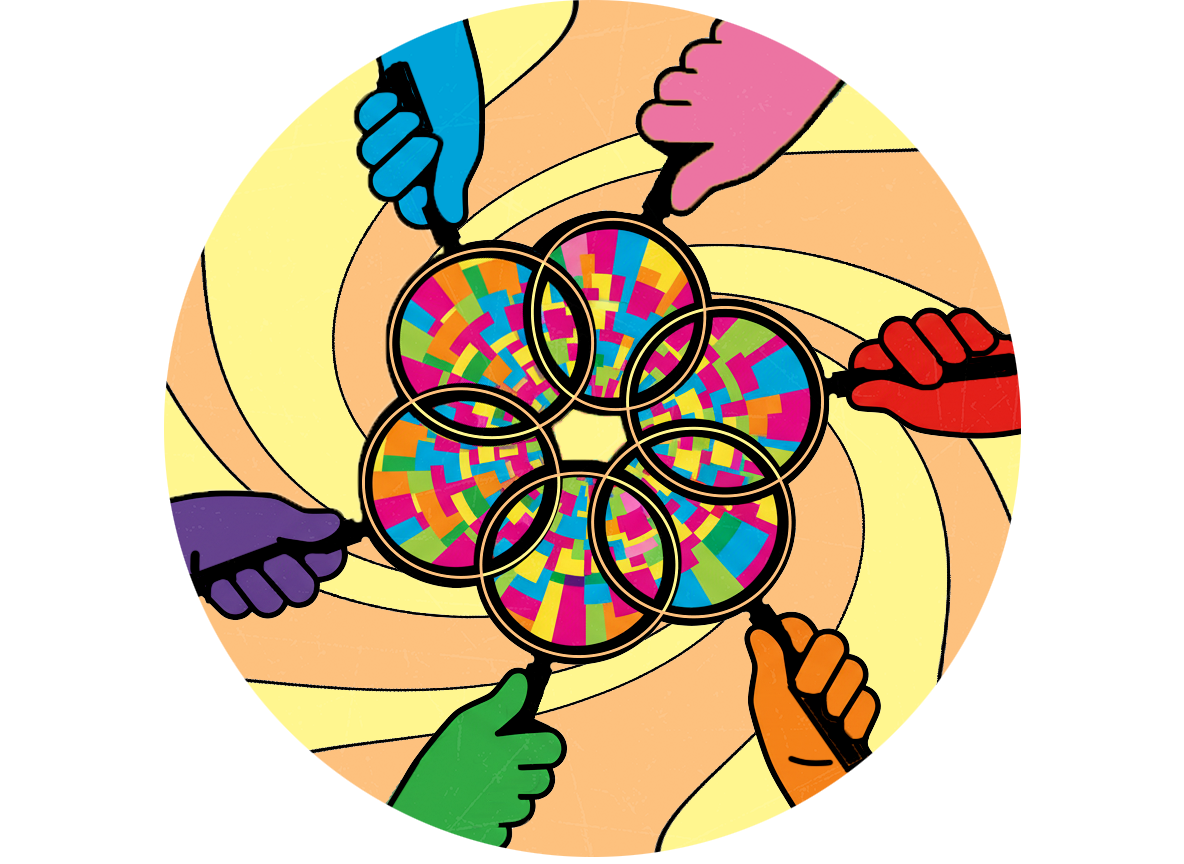
Of course each perspective is valid and necessary. But when each group functions independently too early without true alignment, opportunities begin to diffuse.
Great leaders understand that alignment does not happen accidentally. They treat the early moments of a project as a leadership responsibility, not something to be delegated or hoped for. They protect that space because they know once momentum builds, misalignment becomes expensive to fix.
Six areas where a simple leadership change can make a huge difference:
- Don't let teams rely on good chemistry to overcome missing alignment.
When something great gets created, success often feels random because alignment happened informally rather than intentionally. It often shows up on small teams or fast-moving, under-the-radar projects, where a select few people jump in together. Because of the constraints, they share an intuitive understanding of what they’re aiming for and often work heroically toward it.
But when asked why one project came together in meaningful ways while another quietly diffused into the ordinary, they struggle to explain it. Teams that rely on close-knit chemistry often miss the unseen, yet essential alignment that actually enabled their success.
The opportunity is to make that alignment visible and repeatable, creating a moment in every assignment for shared understanding of what’s possible.
- Don't let the kickoff meeting decide the potential of the project.
Kickoff meetings typically frame timelines, resources, and deliverables of a new project to the various teams. They’re extremely necessary. But most organize execution without first igniting and aligning ambition.
The conversation that protects potential needs to happen earlier — upstream, before momentum makes new thinking disruptive. This is an exciting time when ambitions can be imagined, and diverse perspectives are heard. Decision authority is clarified. Priorities are debated. Constraints and trade-offs are acknowledged so risk is shared.
- Keep project ambitions from growing into a laundry list.
Projects become about too many things: breakthrough yet fast and affordable, bold and safe, innovative and proven. Leaving this kind of complexity intact invites mediocrity. If everything stays important, nothing is, where a singular ambition accelerates greatness.
- Don’t let politeness stand in for prioritization.
Teams stay agreeable, and trade-offs in how they will approach the opportunity remain unspoken. Instead, they default to familiar ways of working rather than pausing, debating when necessary, and deliberately agreeing on the processes that will lead to the best outcomes. Prioritization without trade-offs is imaginary.
- Quash territorial behaviors.
Departmental ambitions can't outweigh making the most out of an opportunity. Alignment requires leaders to surface territorial behavior early, challenge assumptions openly, and ask everyone to commit to what will make the work truly succeed.
- Don't let decision authority stay implied.
When it’s unclear who decides, progress becomes interpretive. Work slows as people hedge, evidenced by extra qualifiers in their thinking, extra slides, and extra meetings. Confidence erodes, and second-guessing fills the space where clarity should be.
The earlier the alignment, the richer the opportunity.
This makes the ability to create early alignment a leadership superpower. It shouldn’t be as rare as it is. Alignment isn’t compromise, it’s extreme clarity. It’s not yet another meeting, it's a way of being. And it fails if it’s delayed, treated as optional, or avoided because it's uncomfortable.
Early alignment allows opportunities to optimize.
When leaders embrace that idea, and build it into how work begins, teams stop guessing because they know not just their role, but the whole. Momentum increases. Trust improves. Leadership strengthens. Great work still feels exciting and alive, but it stops feeling mysterious. Organizations stop hoping for luck, and start actively creating it for themselves. Great work becomes repeatable, not accidental. And that’s where the real advantage lives.
If you’d like to explore how this applies to your organization, feel free to reach out. I’d welcome a conversation.